This article is sourced from China Energy News and authored by Biefan.
This article is based on an interview with China Energy News, conducted with Professor Kang Chongqing, Dean of the Department of Electrical Engineering at Tsinghua University, Director of the Tsinghua Energy Internet Innovation Institute, and Director of the Tsinghua Sichuan Energy Internet Research Institute.
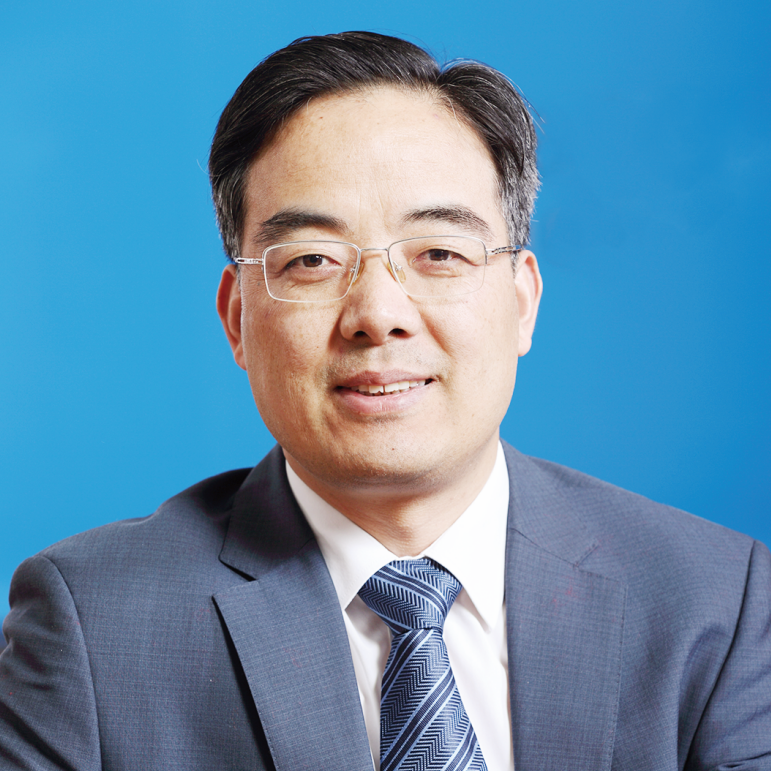
In the recently released outline of the “15th Five-Year Plan,” China proposes to accelerate the development of a new-type power system and the construction of smart grids. The plan also explicitly calls for the coordinated development of green electricity and computing power. This provides key guidance for the next five years of building new-type power systems and enabling a new form of intelligent economy supported by electricity. How can green electricity and computing power achieve mutual synergy? In what direction will virtual power plants evolve in future power systems? How can universities effectively translate scientific research achievements in the energy sector into real-world applications? With these questions in mind, a reporter from China Energy News recently conducted an exclusive interview with Kang Chongqing, Deanof the Department of Electrical Engineering at Tsinghua University, President of the Tsinghua Energy Internet Innovation Research Institute, and President of the Tsinghua Sichuan Energy Internet Research Institute.
Carbon–Electricity–Computation Integration Is the Inevitable Direction for the Integration of New-Type Power Systems and the Digital Economy
China’s power sector accounts for more than 40% of national carbon emissions, making power system decarbonization the main battlefield for achieving the “dual carbon” goals. Low-carbon transformation of the power system is not only an important response to international green trade barriers, but also a solid foundation supporting China’s transition from “dual control of energy consumption” to “dual control of carbon emissions.”
As a pioneer in low-carbon power system research in China, Professor Kang Chongqing’s team was the first to reveal the spatiotemporal coupling mechanism between power flows and carbon emissions. They established the “power system carbon emission flow theory” and developed a comprehensive methodological framework.
Unlike traditional methods that ignore the spatial and temporal differences of carbon emissions in power systems, the carbon emission flow theory treats carbon emissions as a traceable, source-trackable, and optimizable network flow, structurally coupled with power flows. Its essence is an equivalent carbon emission embedded in the power flow, which moves through the network along with electricity flows—from generation nodes to load nodes—enabling a precise one-to-one mapping between electricity and carbon emissions.
“Through the carbon emission flow theory, we label power flows with a ‘carbon tag,’ enabling every kilowatt-hour of electricity to have a clear carbon footprint. From generation, to transmission, to consumption, the entire process becomes traceable, quantifiable, and tradable. This solves the long-standing problem of responsibility allocation for ‘who consumes electricity bears the carbon,’ and provides a unified accounting foundation for carbon markets, green electricity trading, and zero-carbon industrial parks,” Kang Chongqing explained. He noted that the theory has already enabled minute-level and user-level carbon emission measurement and traceability in power systems.
“By leveraging carbon flow patterns in power systems, enterprises can identify when and where electricity consumption is lowest in carbon intensity. In the era of carbon tariffs, low-carbon electricity becomes a driver for cost reduction and a key pass to overcome trade barriers,” he emphasized.
Kang Chongqing further introduced that the theory has already produced core practical outcomes, including electricity carbon meters, dynamic carbon emission factors, carbon maps of power systems, and low-carbon demand response mechanisms. Among them, electricity carbon meters enable real-time carbon accounting across the entire source-grid-load chain, providing a solid data foundation. Dynamic carbon emission factors break the traditional static accounting model, forming time- and region-dependent low-carbon evaluation standards. Carbon maps visually present regional carbon intensity distribution and inter-regional carbon flow patterns, supporting system-level decision-making. Together, these components generate real-time carbon signals and evolve into low-carbon demand response systems, shifting electricity load regulation from price-driven behavior to carbon–electricity coordinated optimization. Some of these achievements, including carbon monitoring technologies, have already been deployed in power grids in North China, Jiangsu, and Guangxi, enabling coordinated optimization of safety, economic efficiency, and low-carbon operation.
Although the mechanisms of carbon flow in power systems have been clarified and technologies for active carbon control and coordinated emission reduction have been developed, the low-carbon transformation of the power system is far from complete.
With the rapid development of artificial intelligence and the advancement of national strategies such as “East Data, West Computing,” data centers have emerged as a new type of load, with rapidly increasing electricity consumption. However, China’s wind and solar resources are primarily located in the western and northern regions, while data and computing demand is concentrated in the eastern and central regions. This spatial mismatch creates new and more complex challenges for the mutual empowerment of energy systems and AI. The power system must meet rapidly growing computing loads while simultaneously achieving decarbonization.
In response, Kang Chongqing emphasized that under the dual carbon goals and digital transformation opportunities, the new-type power system will expand from the traditional “source-grid-load-storage” framework to a “source-grid-load-storage-carbon-computation” (SGLSCC) system. Building a coordinated system integrating computing power, electricity, and carbon is an inevitable direction for the integration of new-type power systems and the digital economy.
“The key to achieving carbon–electricity–computation coordination is to make computing power follow green electricity, and electricity consumption follow carbon intensity,” he said. Computing loads, with their inherent flexibility and shiftability, are naturally large-scale flexible resources. By leveraging their potential as “virtual energy storage” and “virtual peak shaving” resources, they can improve renewable energy consumption and reduce system carbon intensity. “Therefore, it is essential to break down institutional barriers among electricity markets, carbon markets, green certificate markets, and computing markets, eliminate data silos and value fragmentation, and establish a joint trading mechanism for electricity, carbon, and computing, enabling low-carbon computing power to be measurable, tradable, and traceable,” he emphasized.
China’s virtual power plant technology is developing rapidly.
Virtual power plants represent a key approach in new-type power systems to enhance demand-side coordination capabilities. From Kang Chongqing’s perspective, although the concept of virtual power plants (VPPs) emerged relatively early, real engineering applications have mainly concentrated in the past seven to eight years. But it is precisely during these seven to eight years that China’s virtual power plant technology has advanced to a world-leading level.
“Each country has different resource endowments and practical conditions. Therefore, different countries have developed VPP technologies suited to their own aggregated resources, forming their own characteristics. China has a wide variety of demand-side resources. We have proposed standardized modeling methods for heterogeneous resource aggregation, enabling different resources to be characterized in a unified external form. In this way, VPPs can have standardized representation models, which in turn allow optimization and control of the means by which VPPs participate in power system balancing. This has also become an area in which China leads the world in VPP technology.” Kang Chongqing noted that with the continuous improvement of China’s electricity spot market, virtual power plants will further develop and are expected to gain more significant advantages in regional pilot applications.
In fact, as early as 2017, Kang Chongqing and his team began preliminary research on virtual power plants. From the “13th Five-Year Plan” National Key R&D Program on “Smart Grid Technology and Equipment,” to China’s first VPP National Key R&D Program project during the “14th Five-Year Plan” period—“Key Technologies for Aggregation and Interactive Dispatch of Large-Scale Flexible Resources in Virtual Power Plants”—and then to the “15th Five-Year Plan” second national-level VPP project, “Key Technologies for Active Support of Multi-Level Power Grid Operation by Virtual Power Plants,” the technology has continuously evolved as research deepened. “Currently, VPP technology has evolved from a static energy-centered aggregation model to a more complete unit-like system with dynamic response capabilities, enabling support for multi-level power grids on shorter time scales.”
“Through virtual power plants, the power system balancing paradigm has shifted from a rigid ‘source following load’ mode to a flexible ‘source–load interaction’ mode.” Kang Chongqing explained that, under technological development and policy support, China’s virtual power plants have formed a strong development momentum. Technically, they have achieved cross-node and cross-regional resource aggregation. Institutionally, beyond establishing a ‘national team’ in research, the Virtual Power Plant Professional Committee has been set up under the China Energy Research Society, and a similar committee under the China Electricity Council is also under preparation. At the same time, a large number of private enterprises have been attracted to participate in VPP platform trading, fully aggregating available resources and generating tangible economic benefits.
Standards are the foundation of all work. Regarding the development of VPP standard systems, Kang Chongqing stated that China has already issued multiple national standards for virtual power plants. In March this year, the National Energy Administration released the “2026 Energy Industry Standard Planning and Project Initiation Guide,” listing virtual power plants as a key focus area. “It is expected that this year, the density of national standards in the VPP field will increase further on top of industry standards.” Kang Chongqing believes that in this process, both state-owned enterprises and private enterprises will participate simultaneously. “Virtual power plants fundamentally require the joint participation of both state-owned and private enterprises to truly generate systemic impact.”
Sichuan Institute has grown into a flagship model of university–local government collaboration
As Dean of the Department of Electrical Engineering at Tsinghua University, Kang Chongqing is also the Director of the Tsinghua Sichuan Energy Internet Research Institute. In 2016, the Tsinghua Sichuan Energy Internet Research Institute (hereinafter referred to as the “Sichuan Institute”) was officially established in Tianfu New Area, Sichuan, becoming the first new-type research institution under the strategic cooperation between Tsinghua University and Sichuan Province, and the only research institute Tsinghua University has established in western China.
“Ten years of hard work. We have always adhered to the original mission of ‘from Tsinghua, rooted in Sichuan,’ transforming laboratory theories into deployable and effective engineering practice, truly serving Sichuan’s energy transition and China’s ‘dual carbon’ goals with Tsinghua’s intellectual strength.” Kang Chongqing said.
Kang Chongqing introduced that the “one department, two institutes, one lab, one alliance” (“Five-in-One”) development system led by Tsinghua University’s Department of Electrical Engineering provides comprehensive support for the Sichuan Institute—fundamental research is supported by the department as a source of innovation, the Tsinghua Energy Internet Innovation Research Institute provides strategic direction, the Sichuan Institute focuses on technology translation, the State Key Laboratory of New-type power System Operation and Control addresses core technical bottlenecks, and the National Energy Internet Industry and Technology Innovation Alliance promotes industrial collaboration.
Over the past decade, the Sichuan Institute team has grown from just 3 founders into a leading force of 445 full-time researchers, producing substantial results backed by tangible data and deployable achievements, writing a “Tsinghua answer” to university–local collaborative innovation.
“Aligned with Sichuan’s clean energy advantages, the institute has precisely positioned its research directions, focusing on clean low-carbon energy, new-type power systems, energy carbon neutrality, and energy interdisciplinary integration. It has established ten interdisciplinary research centers and carried out targeted technological breakthroughs based on industry needs.” Kang Chongqing noted that over the past decade, the institute has undertaken more than 70 national-level projects, served over 300 energy enterprises, filed more than 1,200 patent applications, completed 45 technology transfer transactions totaling over 100 million yuan, and achieved multiple breakthroughs in international awards and standard-setting activities.
From laboratories to industrial applications, from technological breakthroughs to ecosystem building, a decade of deep cultivation has turned the Sichuan Institute into a “bridgehead” for provincial-university cooperation and an “incubator” for energy innovation. Standing at the starting point of a new decade, Kang Chongqing said: “The Sichuan Institute should not only come from Tsinghua and be rooted in Sichuan, but also serve the whole country and move toward the world. Keeping pace with the times and focusing on major national strategic needs, we will accelerate the transformation of scientific achievements and contribute more to China’s new-type power system construction and the realization of the ‘dual carbon’ goals.”


 News & Events