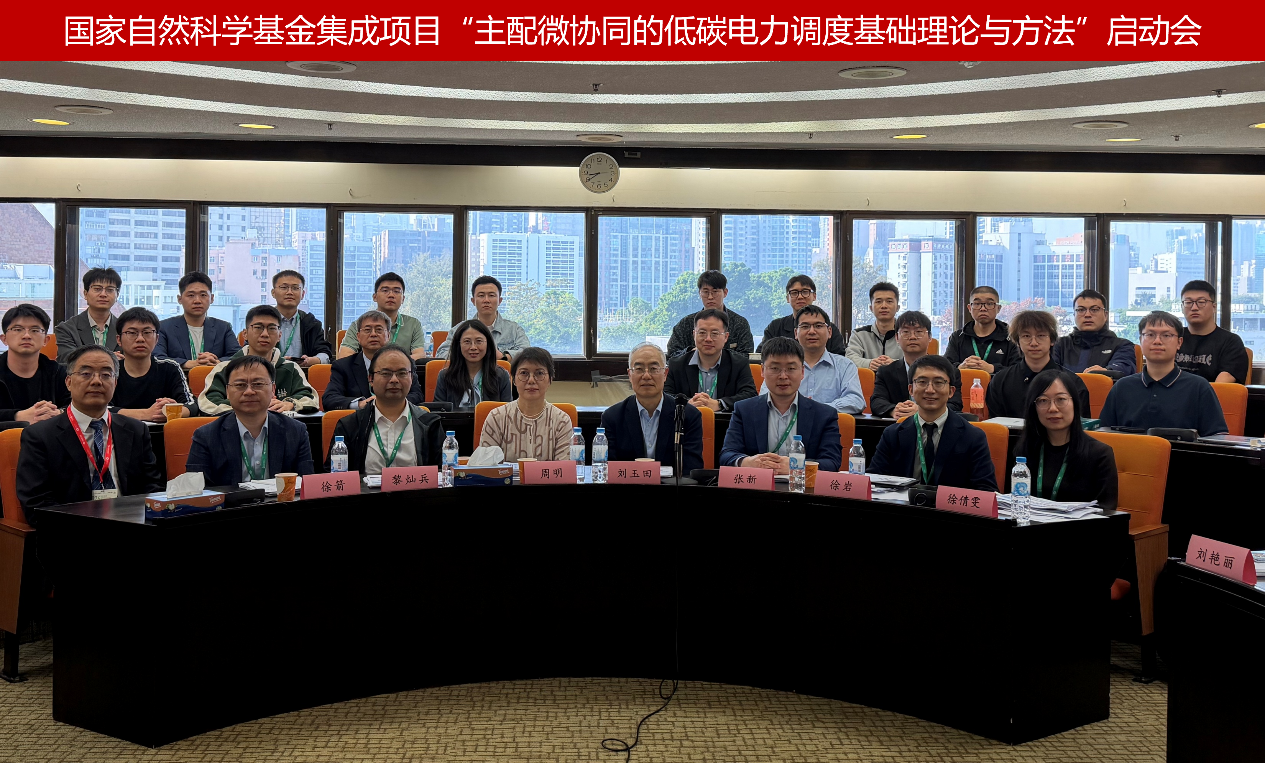
On January 19th, the kick-off meeting for the integrated project "Fundamental Theories and Methods for Low-Carbon Power Dispatch with Main Grid-Distribution Network-Microgrid Coordination" was successfully held in Hong Kong during the inaugural 2026 IEEE Power & Energy Society International Meeting. The project is led by Tsinghua University, in collaboration with South China University of Technology, Tianjin University, the Shenzhen Research Institute of The University of Hong Kong, and the Electric Power Research Institute of China Southern Power Grid Grid Co., Ltd., under the National Natural Science Foundation of China (NSFC) - Enterprise Innovation Development Joint Fund.
Professor Liu Yutian from Shandong University, serving as the leader of the expert panel, along with distinguished experts and scholars from North China Electric Power University, Shanghai Jiao Tong University, Wuhan University, the University of Sheffield, Nanyang Technological University, and the Royal Institute of Technology (KTH) in Sweden, attended the meeting. Over 30 representatives, including principal investigators of sub-projects and core members from the participating institutions (Tsinghua University, South China University of Technology, Tianjin University, the Shenzhen Research Institute of The University of Hong Kong, and the Electric Power Research Institute of China Southern Power Grid Grid Co., Ltd.), were present. The meeting was chaired by the project leader, Professor Kang Chongqing from Tsinghua University.
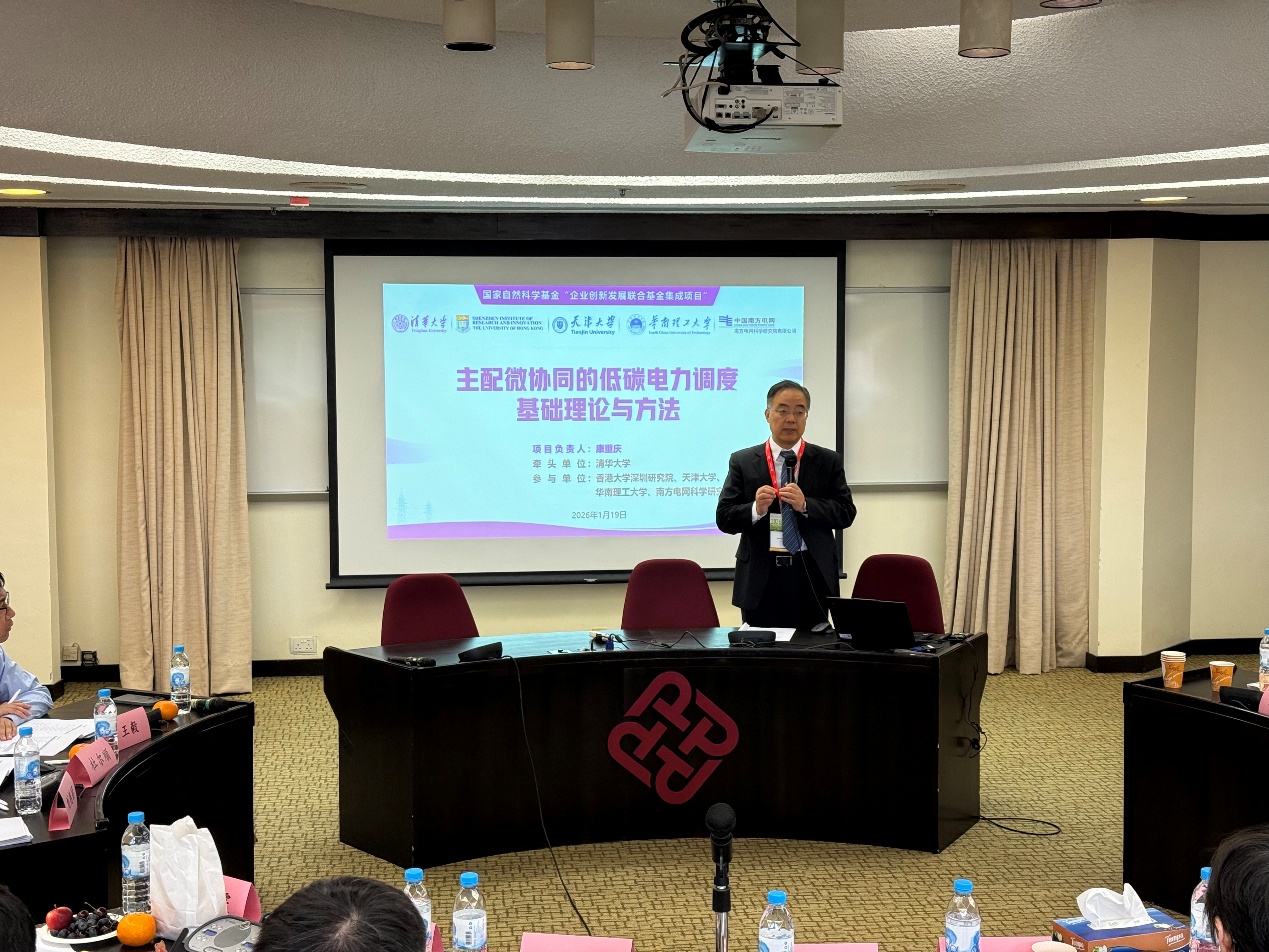
During the kick-off meeting, Professor Kang Chongqing, the project leader, comprehensively introduced the overall project background. Under the goals of "carbon peak and carbon neutrality" and the context of new power system construction, the integration of a high proportion of centralized and distributed renewable energy into the grid, coupled with the rapid growth of flexible and adjustable loads, introduces complex uncertainties on both the source and load sides of the power system. Dispatch coordinating the main grid, distribution networks, and microgrids will become a fundamental paradigm for ensuring the safe, low-carbon, and economic operation of new power systems. The project will focus on the fundamental theories and methods for low-carbon power dispatch involving coordination among the main grid, distribution networks, and microgrids. It aims to construct a collaborative model with the "main grid as the dispatch center, distribution networks as coordinating links, and microgrids as autonomous units," and establish a digital low-carbon dispatch system guided by "carbon emission flow as the directive, energy flow as the carrier, and information flow as the support." This will provide theoretical and technical support for the low-carbon and digital transformation of power systems.
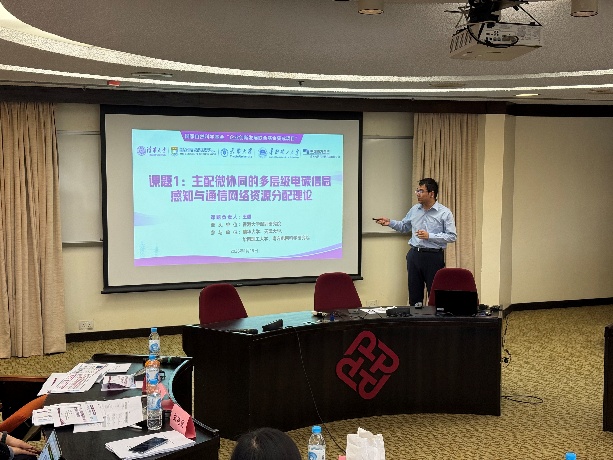
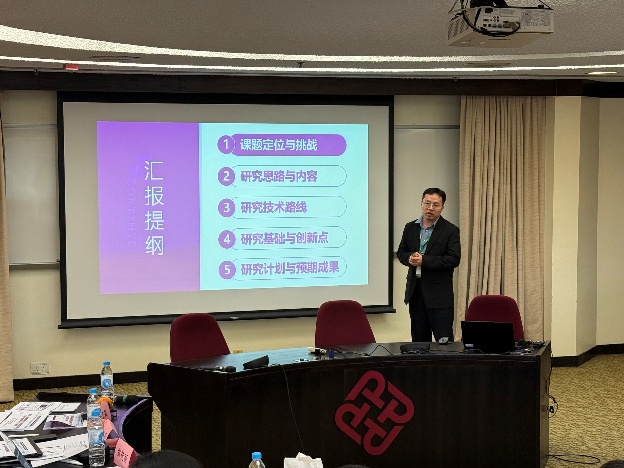
Subsequently, sub-project leaders, including Assistant Professor Wang Yi from the Shenzhen Research Institute of The University of Hong Kong, Associate Researcher Du Ershun from Tsinghua University, Professor Liu Yanli from Tianjin University, and Professor Zhu Jizhong from South China University of Technology, gave detailed presentations on the research tasks, technical approaches, and expected objectives of their respective sub-projects. They outlined the implementation plan for the project, covering aspects such as electricity-carbon sensing, collaborative modeling, risk prevention and control, and low-carbon dispatch.
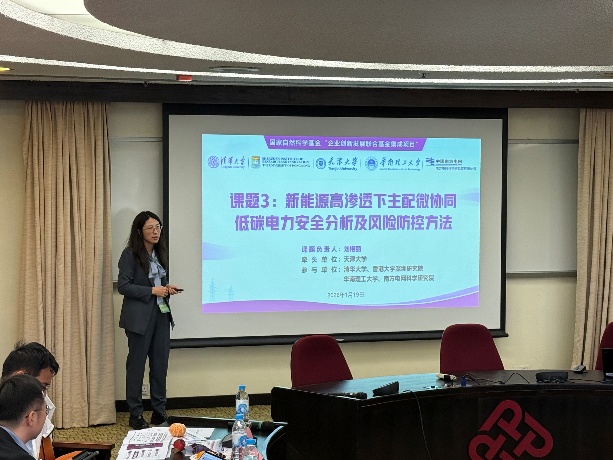
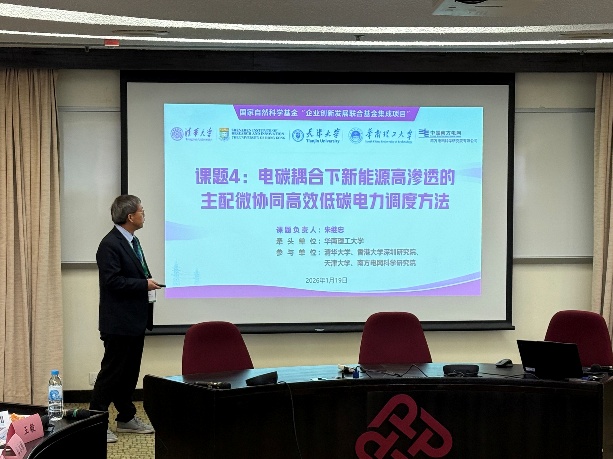
During the expert review session, Professor Liu Yutian led the panel in in-depth discussions. The expert panel acknowledged that the project team had developed a detailed and feasible implementation plan based on the project proposal since its inception. Simultaneously, the panel offered targeted and constructive suggestions regarding the technical approaches of each sub-project, providing direction for the project's optimization and improvement.
In his response, Professor Kang Chongqing expressed sincere gratitude for the expert panel's meticulous guidance. He stated that the project team would carefully incorporate the experts' suggestions, further refine the research plan, and strengthen close collaboration among the different sub-projects. He also emphasized the importance of enhancing practical investigations, highlighting theoretical innovation, leveraging the academic leadership role of the NSFC project, and striving to produce a series of original achievements with international influence.
The successful convening of this kick-off meeting marks the official entry into the full implementation phase for the integrated project "Fundamental Theories and Methods for Low-Carbon Power Dispatch with Main Grid-Distribution Network-Microgrid Coordination." The project team will seize this opportunity to build consensus, consolidate efforts, and steadily advance all research activities, contributing to the low-carbon energy transition and the construction of new power systems.


 News & Events