题目:Halide Perovskite Semiconductors: A Journey into the Nanoscale
报告人:Sam Stranks,剑桥大学教授,英国皇家化学会会士、物理学会会士
时间:2026年3月13日(周五)上午 9:30-11:00
地点:西主楼2-203
报告简介
Halide perovskite solar cells are generating enormous excitement owing to their use in high-performance optoelectronic devices including solar cells, LEDs and radiation detectors. However, their true potential in performance, stability and functionality has not yet been realised. In this talk, I will outline a series of multimodal microscopy methodologies to unveil nanoscale insights into state-of-the-art halide perovskite materials, providing detailed information about the impact of defects on both performance and stability for solar cells. Correlations between local structural and carrier trapping measurements reveal nanoscale sites that act as carrier traps and sites that seed degradation, as well as other exotic quantum phenomena. Diffuse scattering measurements reveal important local structure phenomena that dictate macroscopic properties. Finally, I will showcase the wide versatility of halide perovskites to generate new electronically tuneable materials, including use of electroactive molecular components and epitaxial, layer-by-layer growth of 2D/3D heterojunctions with clean interfaces.
卤化物钙钛矿在高性能光伏及光电领域展现出巨大潜力,但其性能、稳定性和功能性的上限仍未完全实现。本报告将重点介绍一系列多模态显微成像技术,旨在纳米尺度下解析高性能钙钛矿材料的深层机制,探讨缺陷对太阳能电池效率与稳定性的具体影响。
核心研究内容包括:
缺陷与载流子动力学: 通过建立局部结构与载流子捕获测量之间的相关性,精确定位诱发载流子复合和加速材料降解的纳米级位点,并探讨其中的奇特量子现象。
局部结构与宏观性能: 利用漫散射测量揭示决定宏观物理性质的关键局部结构特征。
材料工程与异质结: 展示钙钛矿材料的高度可调控性,包括引入电活性分子组分,以及通过外延生长技术构建具有“干净”界面的2D/3D 层状异质结。
这些研究不仅深化了我们对钙钛矿材料基础物理的理解,也为开发下一代电子调控材料和高稳定性光电器件提供了理论与实验支撑。
报告人简介
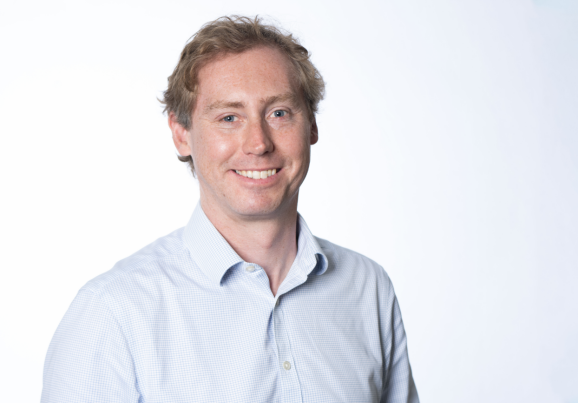
Sam Stranks is Professor of Energy Materials and Optoelectronics and Royal Society University Research Fellow in the Department of Chemical Engineering & Biotechnology and a Cavendish Joint Member in the Cavendish Laboratory, University of Cambridge. He is also a Fellow of Clare College, Cambridge, and an elected Fellow of both the Royal Society of Chemistry and the Institute of Physics.
Sam graduated from the University of Adelaide in 2007 with a BA (German and Applied Mathematics), BSc Hons (Physics and Physical Chemistry) and a University Medal. He completed his PhD as a Rhodes Scholar at Oxford University, receiving the 2012 Institute of Physics Roy Thesis Prize. From 2012-2014, he was a Junior Research Fellow at Oxford University and Worcester College, Oxford, before holding a Marie Curie Fellowship at the Massachusetts Institute of Technology (2014-2016). Sam established his research group in Cambridge in 2017.
Sam's research focuses on the optical and electronic properties of emerging semiconductors including halide perovskites, carbon allotropes and organic semiconductors for low-cost electronics applications such as photovoltaics, lighting and detectors. He has led multi-centre projects from funders such as ERC, EPSRC, Leverhulme Trust and Royal Society totalling over £23M (£13M as PI). He received the 2016 IUPAP Young Scientist in Semiconductor Physics Prize, the 2017 Early Career Prize from the European Physical Society, the 2018 Henry Moseley Award and Medal from the Institute of Physics, the 2019 Marlow Award from the Royal Society of Chemistry, the 2021 IEEE Stuart Wenham Award, the 2021 Leverhulme Prize in Physics, the 2021 EES Lectureship, the 2022 Lem Prize, 2024 Blavatnik Awards in the UK Finalist and 2025 Nevill Mott Award and Medal from the the Institute of Physics. He is a TED Fellow and in 2017 was listed by the MIT Technology Review as one of the 35 under 35 innovators in Europe. Sam is a co-founder of Swift Solar, a startup developing high-performance perovskite PV panels, Clarity Sensors, a startup developing next-generation X-ray detectors for medical imaging, and Sustain/Ed, a not-for-profit developing education for school-age children around climate change solutions. He is also an Associate Editor at the AAAS journal Science Advances, and sits on the Editorial Boards for the journals ACS Energy Letters, Advanced Energy Materials, PRX Energy and Energy & Environmental Science.
Sam Stranks 现任剑桥大学化学工程与生物技术系能源材料与光电子学教授,同时也是英国皇家学会大学研究员(Royal Society University Research Fellow)以及剑桥卡文迪许实验室的成员。此外,他还是剑桥大学克莱尔学院(Clare College)的Fellow,并获选为英国皇家化学学会(RSC)和英国物理学会(IOP)的双料会士。
教育与学术背景
2007年: 毕业于阿德莱德大学,获得文学学士(德语与应用数学)和理学荣誉学士(物理与物理化学),并荣获大学奖章。
博士阶段: 作为罗德学者(Rhodes Scholar)在牛津大学完成博士学位,并获得 2012 年英国物理学会 Roy 论文奖。
博士后经历: 2012-2014 年在牛津大学及伍斯特学院担任青年研究员;2014-2016 年在麻省理工学院(MIT)从事玛丽·居里学者研究。
建立团队: 2017 年在剑桥大学正式建立自己的研究团队。
研究领域与成就
Stranks 教授的研究重点在于新兴半导体材料(包括卤化物钙钛矿、碳同素异形体和有机半导体)的光学和电子特性,旨在开发低成本的电子应用,如光伏、照明和探测器。
他在科研项目领导力方面表现出色:
领导了由 ERC、EPSRC、Leverhulme Trust 和皇家学会资助的多个中心项目,总资助金额超过 2300 万英镑(其中 1300 万英镑由其担任首席研究员)。
学术兼职: 担任 AAAS 旗下期刊 Science Advances 的副主编,并担任 ACS Energy Letters、Advanced Energy Materials、PRX Energy 以及 Energy & Environmental Science 等顶级学术期刊的编委。
主要荣誉与奖项
凭借在半导体物理和能源材料领域的杰出贡献,他获得了多项国际大奖:
2016年:IUPAP 半导体物理青年科学家奖
2017年:欧洲物理学会早期职业生涯奖
2018年:英国物理学会 Henry Moseley 奖章
2019年:英国皇家化学学会 Marlow 奖
2021年:IEEE Stuart Wenham 奖、Leverhulme 物理学奖、EES 讲席奖
2022年:Lem 奖
2024年:布拉瓦尼克国家青年科学家奖(英国区入围者)
2025年:英国物理学会 Nevill Mott 奖章
他还是 TED Fellow,并在 2017 年被《麻省理工科技评论》评选为“欧洲 35 岁以下科技创新 35 人”。
创业与社会责任
除了学术研究,Stranks 教授还积极推动科研成果的产业化:
Swift Solar: 联合创始人,开发高性能钙钛矿光伏面板。
Clarity Sensors: 联合创始人,开发用于医疗成像的下一代 X 射线探测器。
Sustain/Ed: 联合创始人,一家致力于向学龄儿童普及气候变化解决方案的非营利教育机构。











 通知公告
通知公告